

A gas water heater that stops making hot water usually tells you why, if you know where to look. Some causes take two minutes to check. Others involve the gas valve, burner or venting and need a licensed plumber. Here are the most common reasons we find on gas water heater calls around Marietta, Cobb and Paulding County, and which ones are safe to check yourself.
A gas water heater usually stops heating because the pilot light went out, the thermocouple or flame sensor failed, the gas supply is off, sediment has built up in the tank, or a safety switch tripped. You can safely check the gas valve, the thermostat setting and whether the pilot is lit. If you smell gas, leave the house and call your gas company or 911 from outside.
Reviewed by the Plumbers 4 Real team · Updated October 2026
No hot water right now?
Call or text and a real person answers. We repair and replace gas water heaters 24/7 across Cobb and Paulding.
★★★★★ 4.8 from 240+ Google reviews · Licensed & insured · You approve the price before work starts
Safety first: if you smell gas
Natural gas has an added rotten-egg smell. If you smell it near your water heater, don’t light anything, don’t flip switches, and don’t try to relight the pilot. Get everyone out, then call your gas utility or 911 from outside. Every home with a gas appliance should also have working carbon monoxide alarms. The Consumer Product Safety Commission recommends one on every level and outside sleeping areas.
8 common reasons a gas water heater stops heating
1. The pilot light is out
On older tank heaters, a small pilot flame lights the burner. A draft, a dirty pilot tube or a gas interruption can put it out. Most units have relighting instructions on a label on the tank. If it won’t stay lit, the problem is usually the next item.
2. A bad thermocouple or flame sensor
This safety part shuts off the gas if it doesn’t sense a flame. When it wears out, the pilot lights and then goes out as soon as you let go of the knob. It’s a common, inexpensive repair, but it’s on the gas valve, so it’s a job for a plumber.
3. The gas supply is off
Check that the gas shutoff on the line to the heater is open (handle in line with the pipe) and that your other gas appliances work. If none of them do, it’s a utility issue, not the water heater.
4. The thermostat is set too low
Someone may have bumped the dial to “vacation” or “low.” Most homes are comfortable around 120°F, the setting the U.S. Department of Energy recommends to save energy and avoid scalding.
5. Sediment buildup
Minerals settle at the bottom of the tank over time. You’ll hear rumbling or popping, and the heater takes longer to recover. Sediment wastes gas and shortens the tank’s life. A yearly flush helps prevent it.
6. A broken dip tube
If you get warm water for a minute and then it turns lukewarm, the tube that sends cold water to the bottom of the tank may be cracked, so cold water mixes in at the top.
7. A tripped safety switch or venting problem
Many newer gas heaters have a flame-rollout or high-limit switch that shuts the unit down if the flame or exhaust isn’t venting properly. Don’t keep resetting it. A switch that trips means something needs to be checked.
8. The heater is simply worn out
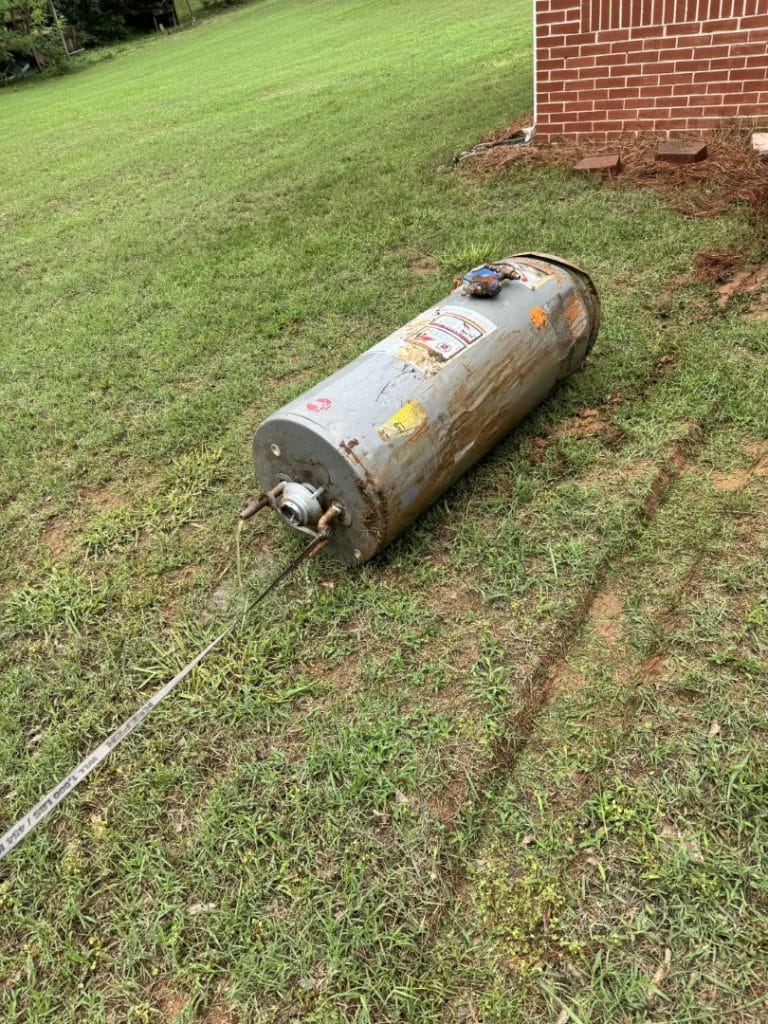
According to the U.S. Department of Energy, a storage water heater lasts about 10 to 15 years. Past that, repairs often cost more than they’re worth, especially if the tank has started to leak.

What you can check yourself
- Is the gas valve to the heater open?
- Do your other gas appliances (stove, furnace) work?
- Is the thermostat set to around 120°F, not vacation or low?
- Can you see the pilot through the viewing window?
- Is there water around the base of the tank?
If those all look fine and you still have no hot water, call a plumber. Anything involving the gas valve, burner, thermocouple, venting or a leaking tank should be handled by a licensed professional.
Repair or replace your gas water heater?
A thermocouple, igniter or dip tube is usually worth repairing on a heater that’s less than about 8 to 10 years old. If the tank itself is leaking, it needs to be replaced; a leaking tank can’t be patched. If your heater is near the end of its life, it may be worth comparing a new tank with a tankless option. We’ll give you the price for both before any work starts.
Frequently Asked Questions
Why is my gas water heater not heating but the pilot is on?
If the pilot is lit but the burner won’t fire, the cause is often the thermostat setting, the gas control valve, or heavy sediment in the tank. A plumber can test the gas valve and burner safely.
Can I relight my gas water heater pilot myself?
Many tank heaters have relighting instructions on the label, and following them is generally fine. If you smell gas, or the pilot won’t stay lit, stop and call a plumber.
How long does a gas water heater last?
The U.S. Department of Energy estimates a storage water heater lasts about 10 to 15 years. Regular flushing helps it last longer.
Is a rumbling gas water heater dangerous?
Rumbling usually means sediment has built up in the tank. It isn’t an emergency, but it wastes gas and shortens the heater’s life, so schedule a flush or inspection.
What should I do if I smell gas near my water heater?
Don’t light anything or flip switches. Get everyone out and call your gas utility or 911 from outside.
No hot water?
Call (404) 819-2137 or text (404) 436-6116. Gas water heater repair and replacement, 24/7 across Marietta, Cobb and Paulding.