

A sewer backup is one of the worst plumbing calls a homeowner can face: dirty water coming up through a floor drain, tub or toilet, and a smell you can’t ignore. What you do in the first hour decides how much gets ruined and how much it costs to fix. Here’s what our plumbers tell Marietta, Cobb and Paulding County homeowners to do, in order.
If you have a sewer backup, stop using all water right away (no flushing, showers, laundry or dishwasher), keep kids and pets away, and don’t touch the sewage without gloves and boots. Turn off power to the area only if you can reach the breaker without standing in water. Then call a plumber to clear the line and find the cause before it backs up again.
Reviewed by the Plumbers 4 Real team · Updated October 2026
Sewage backing up right now?
Stop using water and call. A Plumbers 4 Real plumber answers 24/7 across Marietta, Cobb and Paulding County.
★★★★★ 4.8 from 240+ Google reviews · Licensed & insured · You approve the price before work starts
What to do in the first hour of a sewer backup
- Stop using water everywhere in the house. Every flush, shower or load of laundry sends more water into a line that already can’t drain, and it comes up at the lowest fixture.
- Keep children and pets out of the area. Sewage carries bacteria and viruses.
- Protect yourself. Wear rubber gloves, boots and eye protection if you have to go near it, and wash your hands well afterward.
- Deal with electricity carefully. If water is near outlets, cords or appliances, turn off power to that area at the breaker, but only if you can reach the panel without walking through water.
- Don’t pour chemical drain cleaners in. They rarely clear a main line clog, and they make the water more dangerous for you and for the plumber.
- Take photos of the water, the damage and anything that got wet. Your insurance company will ask for them.
- Call a plumber to clear the line and find out why it happened.

Is it your line or the city’s?
Where the water shows up tells you a lot. If only one sink or toilet is backing up, the clog is usually in that fixture’s branch line. If water comes up in a floor drain, a tub or the lowest toilet when you run water somewhere else, the clog is in your main sewer line, the pipe that runs from your house to the public sewer.
In most of Cobb County, the homeowner is responsible for the sewer line from the house to the connection with the public sewer, and the utility is responsible for the public main. If neighbors are having the same problem, or sewage is coming out of a manhole in the street, call your water and sewer provider. In Cobb, that’s the Cobb County Water System. If it’s only your house, call a plumber. Our guide to who pays for a water or sewer line leak explains the split in more detail.
What causes a sewer backup?
- Grease, wipes and rags. Cooking grease hardens in the pipe and “flushable” wipes don’t break down. Grease, rags and debris are the same things the EPA and local utilities name as leading causes of sewer overflows.
- Tree roots. Roots find tiny cracks and joints in older clay and cast-iron lines and grow into a net that catches everything else.
- Sagging or broken pipe. Georgia clay shifts between wet and dry seasons, and a low spot or crack in the line lets waste settle.
- Heavy rain. Storm water can overload sewer systems and push water back toward homes, especially in basements.
How we fix it
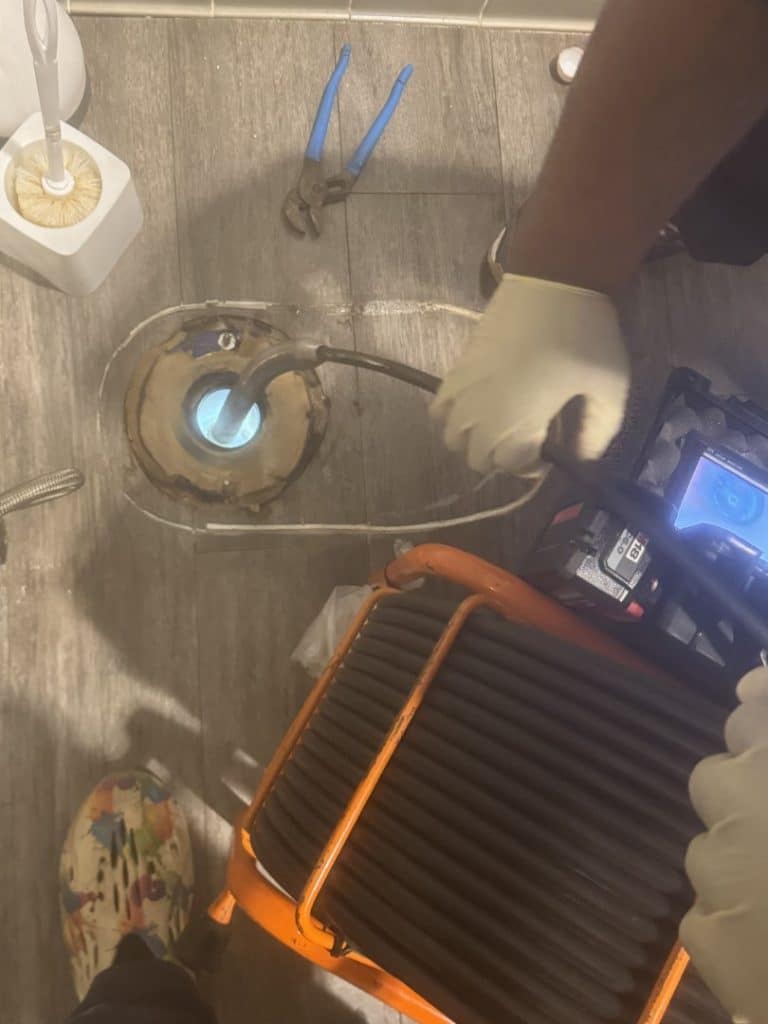
First we clear the line, usually from the outdoor cleanout, so you can use your plumbing again. Then we run a sewer camera inspection to see what caused it. A grease clog may only need hydro jetting to scour the pipe clean. Roots, a belly or a broken section need a sewer line repair, and a line that’s failing end to end may need replacement. You see the camera footage and get the price before we start any repair.
Cleaning up safely after a sewer backup
Sewage is not the same as clean water from a burst pipe. Public health guidance, such as the Virginia Department of Health sewage backup fact sheet, recommends:
- Throwing away anything porous that sewage soaked: carpet and pad, upholstered furniture, mattresses, cardboard, paper and stuffed toys.
- Cutting out drywall several inches above the water line.
- Washing hard surfaces with detergent first, then disinfecting (for example, 1 part bleach to 9 parts water) and letting it sit 15 to 20 minutes.
- Never mixing bleach with ammonia.
- Calling a professional restoration company if sewage sat in a finished living space for more than 24 hours or got into your ductwork.
How to prevent the next one
- Put grease in the trash, not the sink.
- Flush only toilet paper, including no “flushable” wipes.
- Have the main line camera-inspected if you’ve had more than one backup, or if your home has big trees near the sewer line.
- Ask about a backwater valve if your lowest drains sit below street level.
- Check whether your homeowners policy covers sewer backup. Many policies only cover it with an added endorsement.
Frequently Asked Questions
What should I do first when my sewer backs up?
Stop using water everywhere in the house, keep kids and pets away, and call a plumber. Only shut off power to the area if you can reach the breaker without standing in water.
Can I use a chemical drain cleaner on a sewer backup?
No. Chemical cleaners rarely clear a main line clog, they can damage pipes, and they make the backed-up water more dangerous to handle.
Who pays to fix a sewer backup in Cobb County?
In most cases the homeowner is responsible for the sewer line from the house to the public sewer connection, and the utility handles the public main. If neighbors have the same problem, call the Cobb County Water System.
Does homeowners insurance cover a sewer backup?
It depends on your policy. Many standard policies only cover sewer or drain backup if you added a specific endorsement, so check with your agent.
How do plumbers find the cause of a sewer backup?
After clearing the line, a plumber runs a camera through the pipe to look for roots, grease, a sag or a break, so the repair matches the real problem.
Sewer backing up right now?
Call (404) 819-2137 or text (404) 436-6116. We answer 24/7 across Marietta, Cobb and Paulding County.